Quick Overview
- You may understand the topic but still lose marks if you answer the question in the wrong way.
- The problem is not always your subject knowledge — sometimes it is the command word.
- Common IGCSE command words include Describe, Explain, Evaluate, Compare, State and Suggest.
- These words tell you what kind of answer the examiner expects.
- Cambridge International defines command words as words that tell candidates how to answer a question or complete an assessment task.
- Understanding the difference between them can help you avoid giving an answer that is correct in content but incomplete in structure.
Quick Overview
| Command Word | What It Asks You To Do |
| State | Give a clear answer or fact |
| Identify | Name or recognise something |
| Describe | Give characteristics or main features |
| Explain | Say why or how something happens |
| Compare | Give similarities and/or differences |
| Suggest | Apply your knowledge to propose a possible answer |
| Justify | Support your answer with evidence or reasoning |
| Evaluate | Make a judgement about quality, importance, amount or value |
– What Are IGCSE Command Words? ▶
– Why Do Command Words Matter? ▶
– Describe vs Explain vs Evaluate ▶
– How to Answer “Describe” ▶
– How to Answer “Explain” ▶
– How to Answer “Evaluate” ▶
– Other Common IGCSE Command Words ▶
– How Many Points Should You Write? ▶
– Common Mistakes Students Make ▶
– How to Practise Command Words ▶
– FAQ: IGCSE Command Words ▶
What Are IGCSE Command Words?
Command words are the words in an exam question that tell you what you are expected to do.
For example:
- Describe the trend shown in the graph.
- Explain why the temperature increases.
- Evaluate the usefulness of this method.
- Compare the two results.
- State one advantage.
Each question may be testing similar subject knowledge, but the command word changes the type of response you should give.
Cambridge International explains that command words help candidates understand what is expected in an exam question. Subject-specific command words may also appear in individual syllabuses.
Why Do Command Words Matter?
Knowing the content is not always enough.
Imagine that a question asks to explain why the rate of reaction increases when temperature increases.
If you only write:
The particles move faster.
you have described part of what happens. But an explanation needs to make the relationship clearer.
A stronger answer would connect the ideas:
As temperature increases, particles gain kinetic energy and move faster, so collisions occur more frequently and more particles have enough energy for successful collisions.
The second answer shows why the rate increases.
That difference between simply stating what happens and explaining why it happens is exactly why command words matter.
Describe vs Explain vs Evaluate
These three command words are easy to confuse, so it helps to think of them as three different levels of response.
| Command Word | Think | Your Answer Should |
| Describe | “What is happening?” | Give characteristics, features or a pattern |
| Explain | “Why or how is this happening?” | Show reasons, causes or relationships |
| Evaluate | “How good, important or useful is it?” | Consider evidence and make a judgement |
1. How to Answer “Describe”
Meaning:
Cambridge defines Describe as stating the points of a topic or giving its characteristics and main features.
What your answer should do:
Your answer should focus on what you can observe, what happens, or what the main features are.
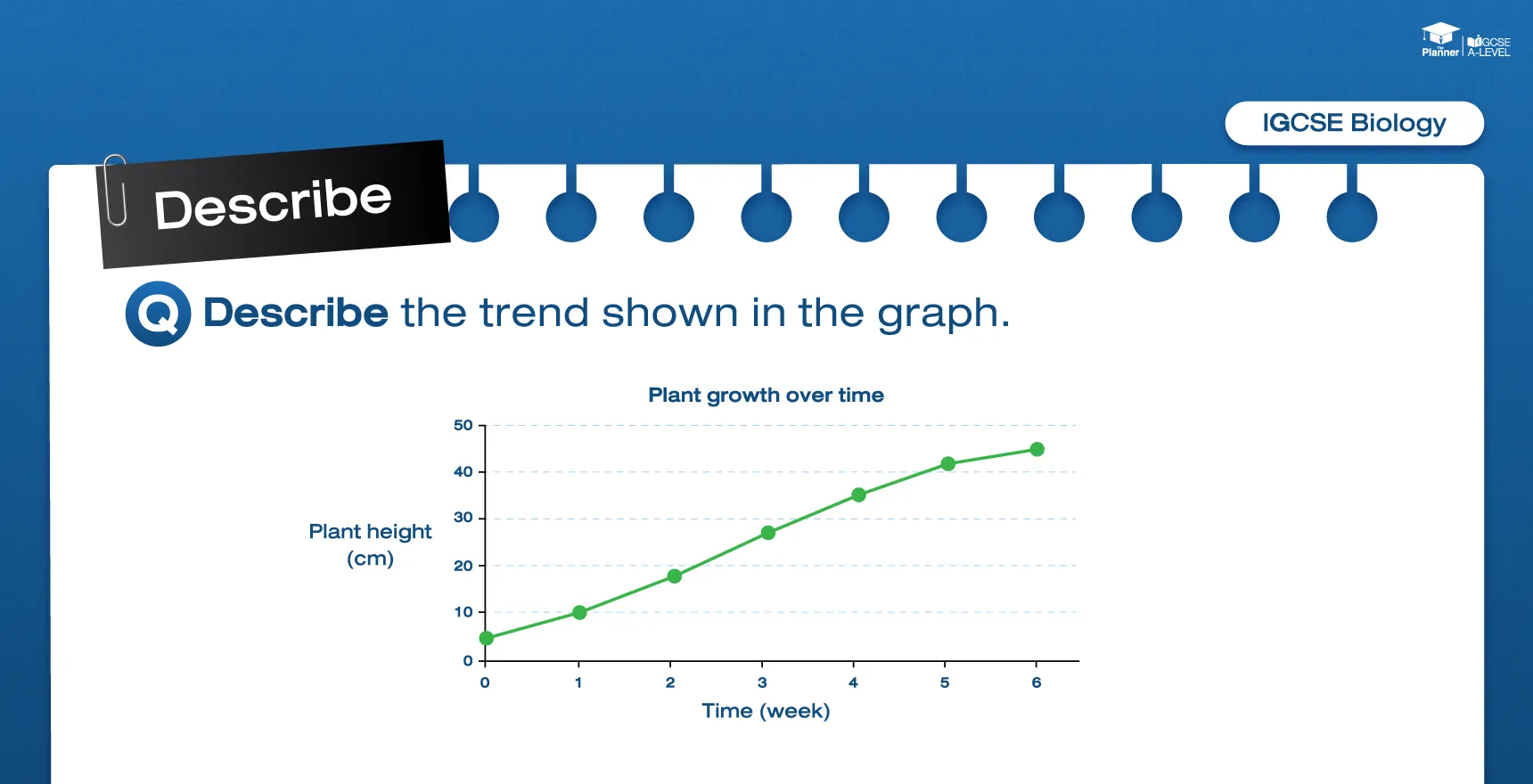
Example:
Describe the trend shown in the graph.
A suitable answer might be:
As temperature increases, the rate of reaction increases.
Tip:
A Describe answer should focus on what you can see or identify. You do not need to explain the reason unless the question asks for it.
This structure is especially useful in subjects such as:
- IGCSE Biology
- IGCSE Chemistry
- IGCSE Physics
- IGCSE Geography
- IGCSE Business
- IGCSE Economics
2. How to Answer “Explain”
Meaning:
Explain asks you to show why or how something happens.
What your answer should do:
Give the reason or process clearly.
Example:
Explain why public transport can reduce traffic congestion.
A suitable answer might be:
Public transport can reduce traffic congestion because it allows more people to travel in one vehicle instead of using separate cars. This reduces the number of cars on the road and helps traffic move more smoothly.
This structure is especially useful in subjects such as:
- IGCSE Biology
- IGCSE Chemistry
- IGCSE Physics
- IGCSE Geography
- IGCSE Business
- IGCSE Economics
3. How to Answer “Evaluate”
Meaning:
Evaluate asks you to judge how effective, useful, important or suitable something is.
What your answer should do:
Consider the strengths and limitations, then make a judgement.
Example:
Evaluate whether public transport is the best way to reduce traffic congestion.
A suitable answer might be:
Public transport can help reduce congestion because it carries many passengers at once. However, it may be less effective in areas with limited routes or low service frequency. Overall, it can be a useful solution, but its effectiveness depends on the quality and availability of the transport system.
This structure is especially useful in subjects such as:
- IGCSE Environmental Management and Global Perspectives.
- IGCSE Geography
- IGCSE Business
- IGCSE Economics
Describe vs Explain: What Is the Real Difference?
A Describe answer tells the examiner what something is like or what happens.
An Explain answer shows why or how it happens.
For example:
Describe:
The speed increases over time.
Explain:
The speed increases because there is a resultant force acting on the object, causing it to accelerate.
From the example above shows that the second answer creates a relationship between cause and effect.
Cambridge guidance also makes this distinction: adding more description does not automatically turn an answer into an explanation. You need to show why the point matters or how one idea leads to another.
Explain vs Evaluate: What Is the Difference?
An Explain answer shows why or how something happens.
An Evaluate answer considers the strengths and limitations of something, then reaches a judgement.
For example:
Explain:
Public transport reduces congestion because more people can travel in one vehicle, so fewer cars are on the road.
Evaluate:
Public transport can reduce congestion because it carries many passengers at once. However, it may be less effective if services are limited or unreliable. Overall, it is useful, but its success depends on how well the system operates.
Notice that the second answer does more than explain. It weighs up the idea and gives a final judgement.
If you understand the content but still lose marks in IGCSE exam questions,
At The Planner Education, tutors can help identify where marks are being lost, practise subject-specific exam techniques and work through Past Paper questions so you can learn how to turn your knowledge into stronger exam answers.



Other Common IGCSE Command Words
“State”
Meaning:
Cambridge defines State as expressing something in clear terms.
What your answer should do:
Give a short, direct answer without extra explanation.
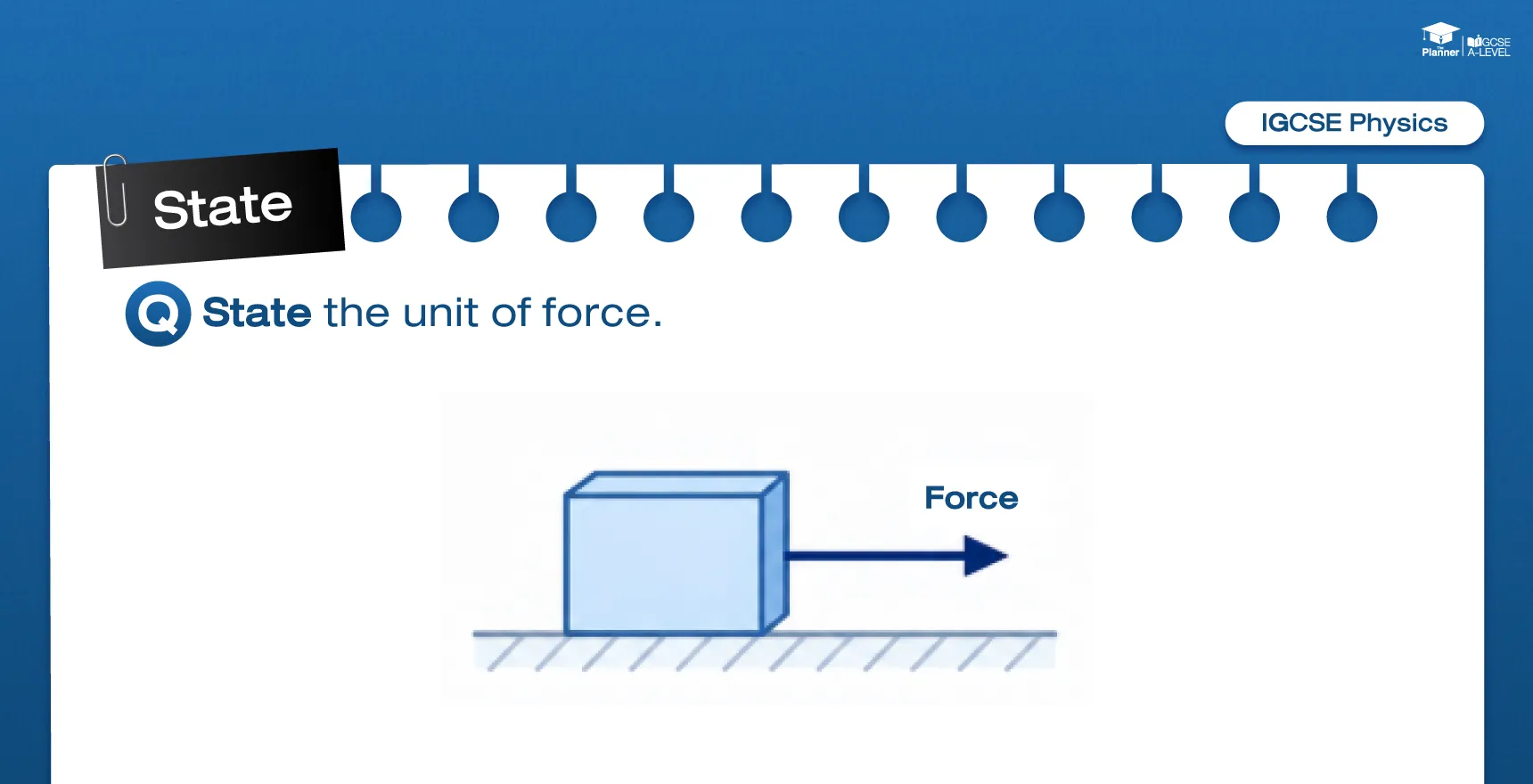
Example:
State the unit of force.
A suitable answer might be:
Newton (N)
This structure is especially useful in subjects such as:
- IGCSE Biology
- IGCSE Chemistry
- IGCSE Physics
- IGCSE Maths
“Identify”
Meaning:
Cambridge defines Identify as naming, selecting or recognising something.
What your answer should do:
Give the correct name, label or option.
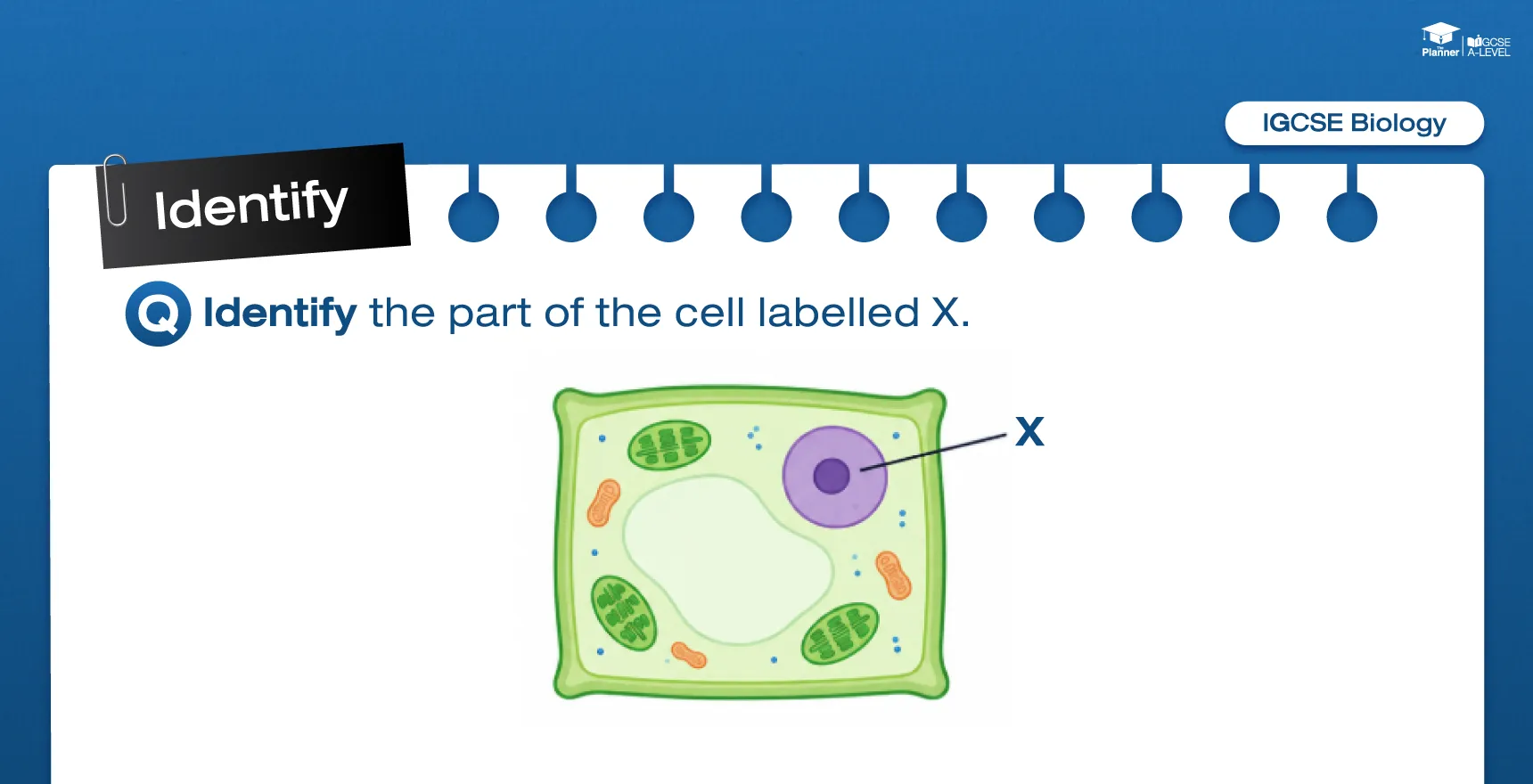
Example:
Identify the part of the cell labelled X.
A suitable answer might be:
Nucleus
This structure is especially useful in subjects such as:
- IGCSE Biology
- IGCSE Geography
- IGCSE Physics
- IGCSE Environmental Management
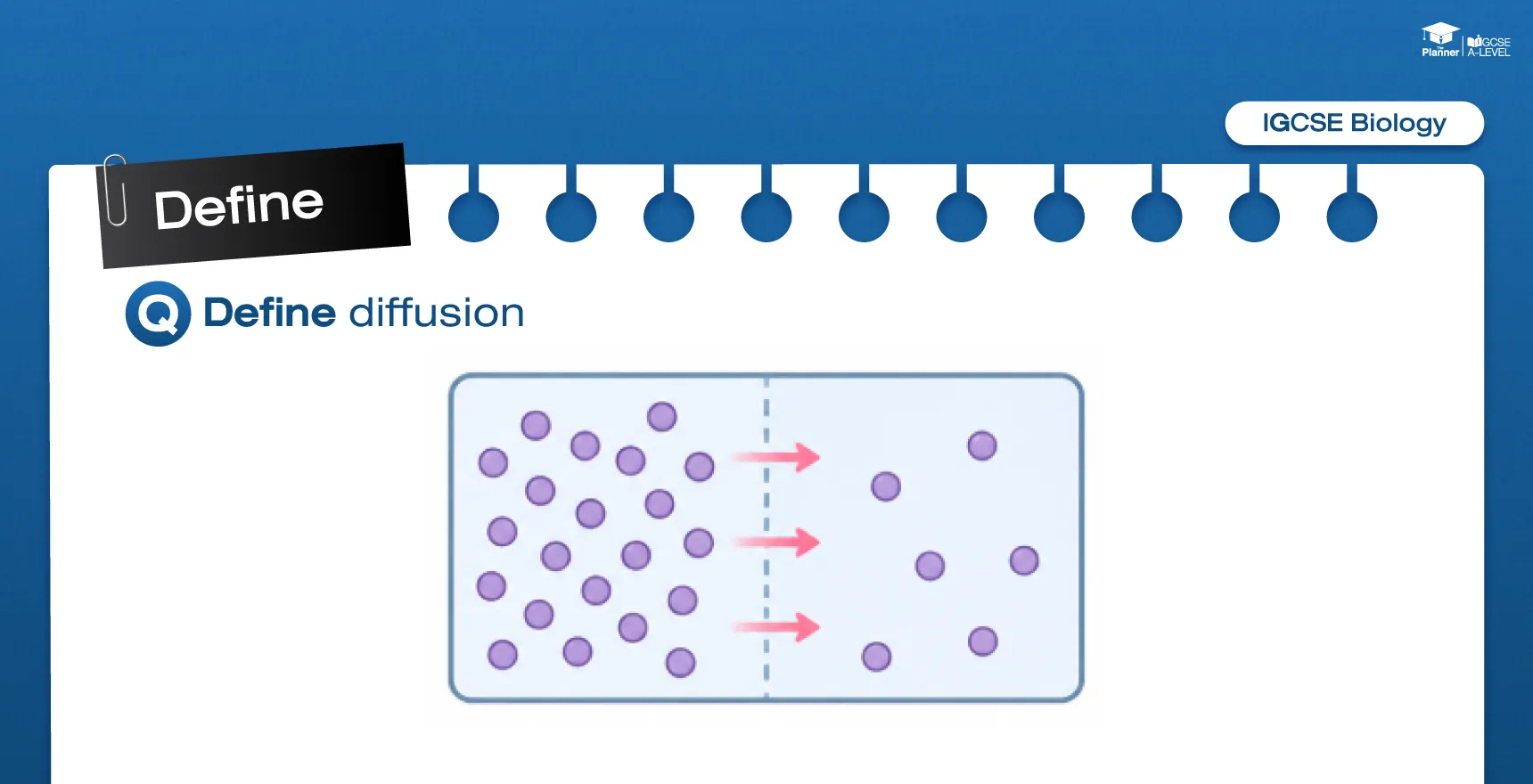
“Define”
Meaning:
Cambridge uses Define to ask for the precise meaning of a term.
What your answer should do:
Give the exact meaning of the word or concept.
Example:
Define diffusion.
A suitable answer might be:
The net movement of particles from a region of higher concentration to a region of lower concentration.
This structure is especially useful in subjects such as:
- IGCSE Biology
- IGCSE Chemistry
- IGCSE Physics
- IGCSE Business
- IGCSE Economics
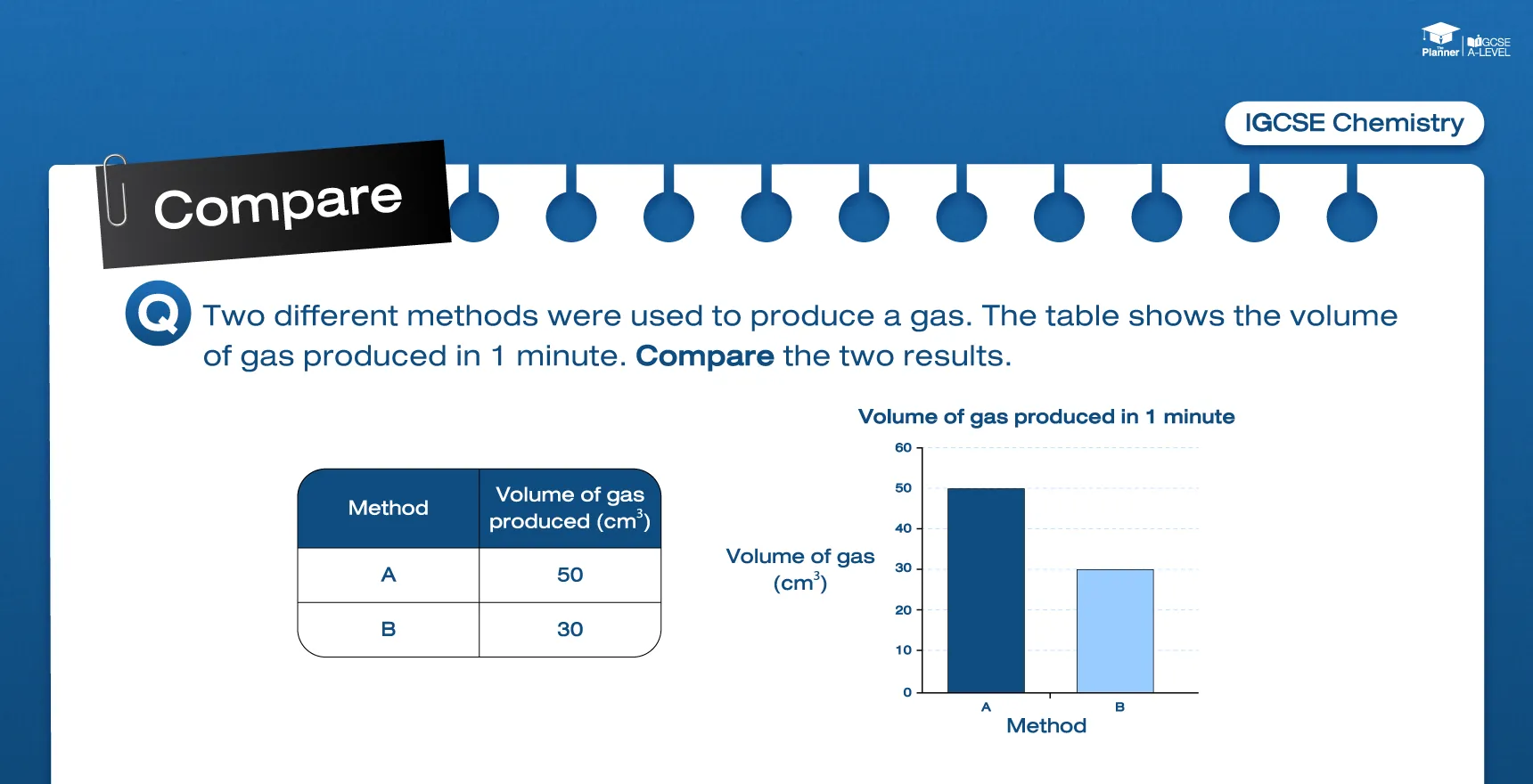
“Compare”
Meaning:
Cambridge defines Compare as identifying or commenting on similarities and/or differences.
What your answer should do:
Make the comparison directly, rather than describing each item separately.
Example:
Compare the two results.
A suitable answer might be:
Result A is higher than Result B, while Result B shows less variation.
This structure is especially useful in subjects such as:
- IGCSE Biology
- IGCSE Geography
- IGCSE Physics
- IGCSE Business
- IGCSE Economics
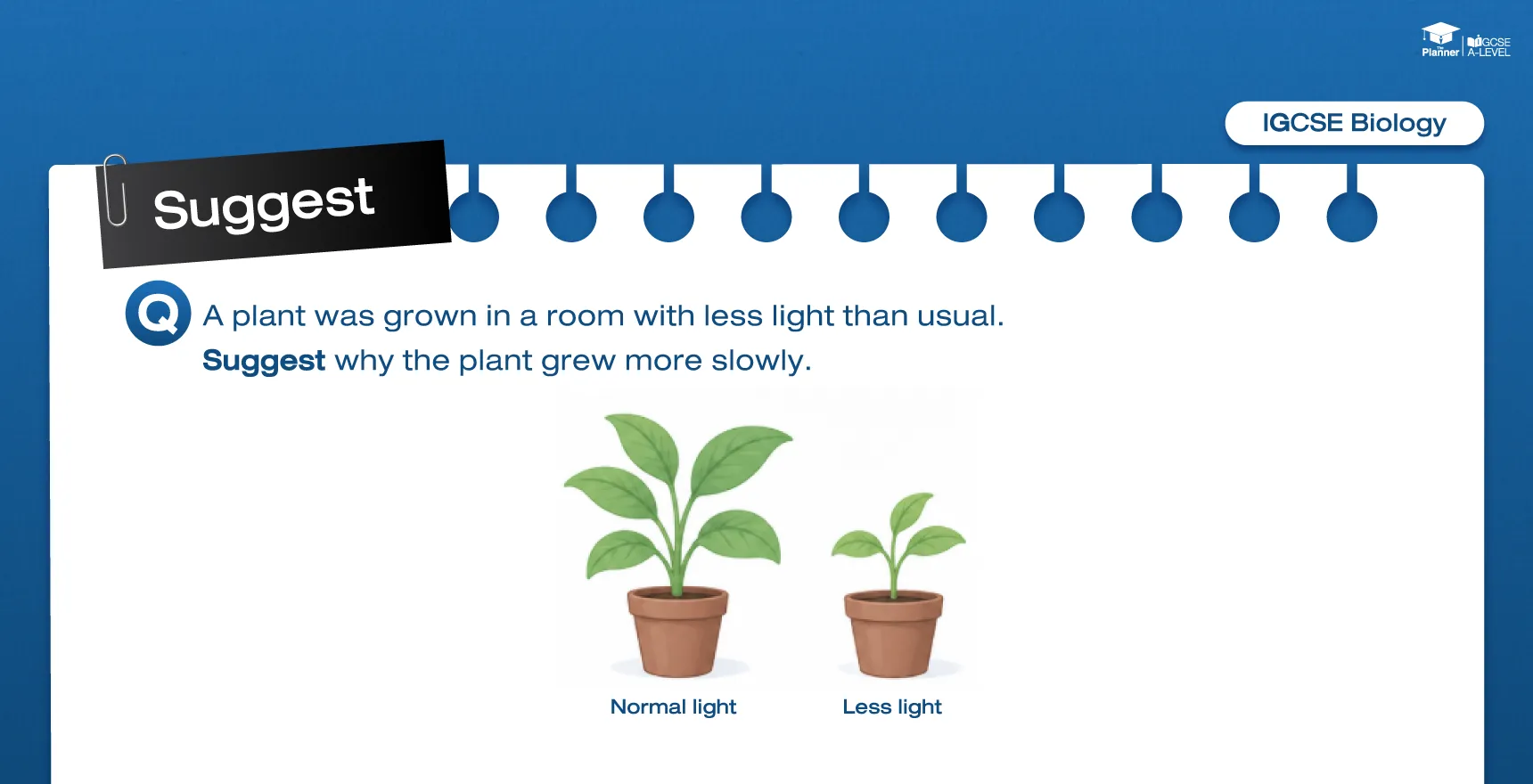
“Suggest”
Meaning:
Cambridge defines Suggest as applying knowledge and understanding to answer a question.
What your answer should do:
Use what you know to give a logical possible answer, even if it is not stated directly.
Example:
Suggest why the plant grew more slowly.
A suitable answer might be:
The plant may have received less sunlight.
This structure is especially useful in subjects such as:
- IGCSE Biology
- IGCSE Geography
- IGCSE Physics
- IGCSE Chemistry
- IGCSE Environmental Management
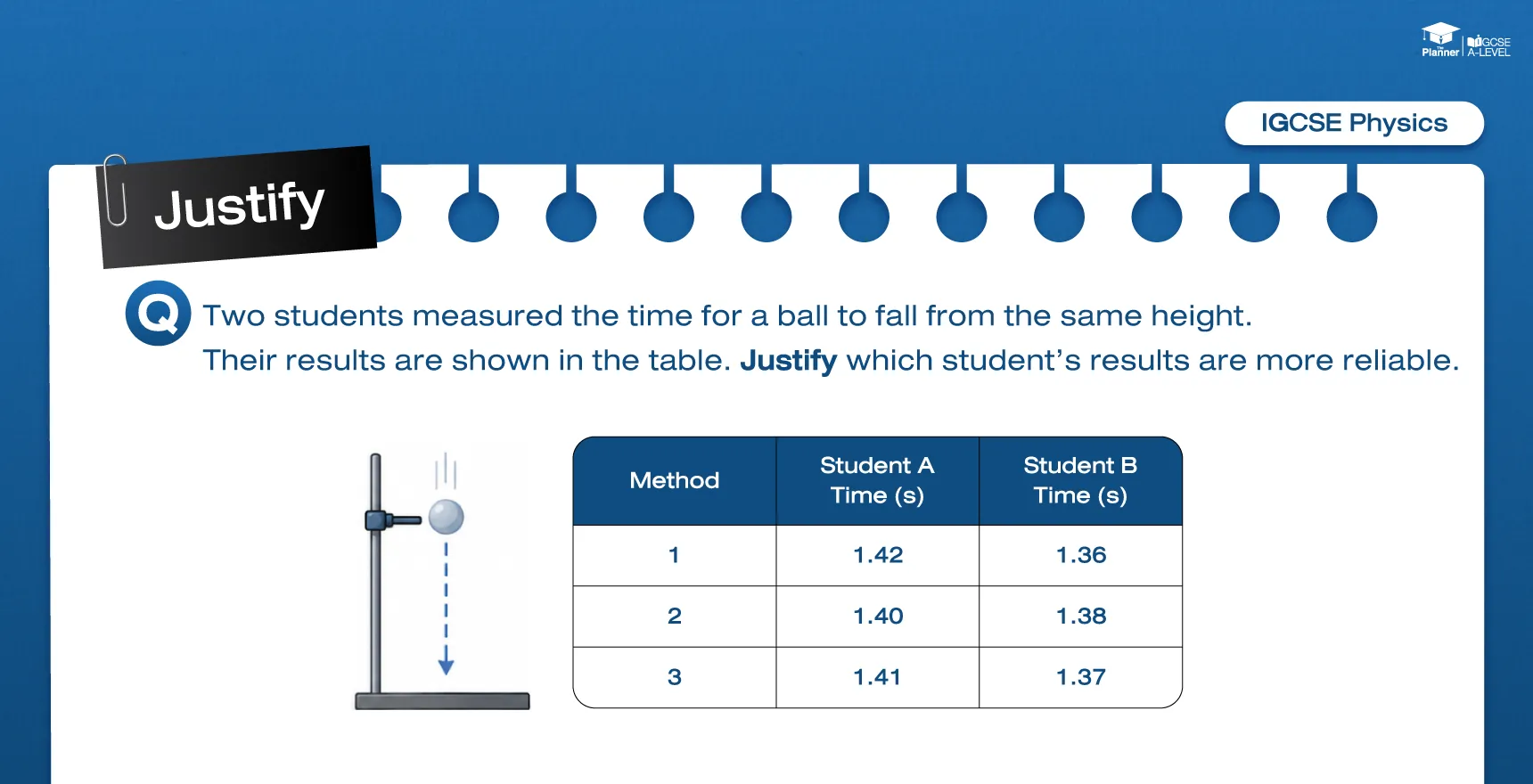
“Justify”
Meaning:
Cambridge defines Justify as supporting a case with evidence or argument.
What your answer should do:
Give your answer and explain why it is reasonable.
Example:
Justify which method is better.
A suitable answer might be:
Method A is better because it gives more accurate results and reduces measurement error.
This structure is especially useful in subjects such as:
- IGCSE Business
- IGCSE Economics
- IGCSE Global Perspectives
- IGCSE Physics
- IGCSE Chemistry
- IGCSE Biology
“Analyse”
Meaning:
Cambridge defines Analyse as examining in detail in order to show meaning, identify features and relationships, and draw conclusions.
What your answer should do:
Break the information into parts and show how those parts are connected.
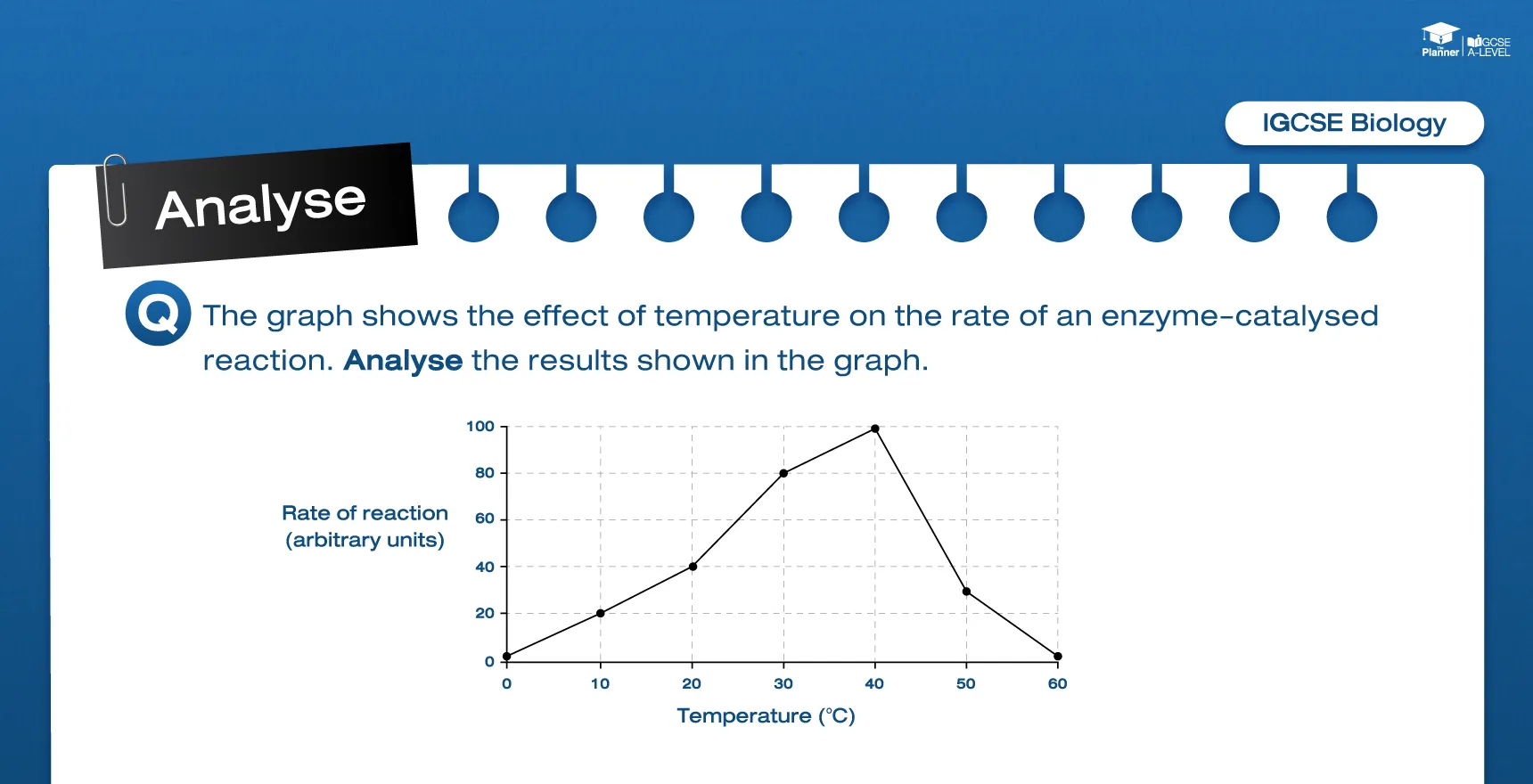
Example:
Analyse the data in the table.
A suitable answer might be:
The data shows that as temperature increases, enzyme activity rises to a peak before decreasing, suggesting there is an optimum temperature.
This structure is especially useful in subjects such as:
- IGCSE Business
- IGCSE Economics
- IGCSE Geography
- IGCSE Global Perspectives.
- IGCSE Biology
“Discuss”
Meaning:
Cambridge defines Discuss as writing about an issue or topic in depth in a structured way.
What your answer should do:
Consider different ideas, viewpoints or factors in a balanced way.

Example:
Discuss whether tourism is beneficial to the country.
A suitable answer might be:
Tourism can benefit the country by creating jobs and increasing income. However, it may also lead to environmental damage. Overall, its impact depends on how tourism is managed.
This structure is especially useful in subjects such as:
- IGCSE Business
- IGCSE Economics
- IGCSE Geography
- IGCSE Environmental Management
- IGCSE Global Perspectives
IGCSE Command Words Cheat Sheet
| Command Word | Ask Yourself | What your answer should do |
| State | Express something in clear terms | Give a short, direct answer |
| Identify | Name, select or recognise | Give the correct name or label |
| Define | Give the precise meaning | State the exact meaning of the term |
| Describe | Give characteristics or main features | Say what happens or what you can observe |
| Explain | Give reasons or make relationships clear | Show why or how something happens |
| Compare | Identify similarities and/or differences | Compare items directly |
| Suggest | Apply knowledge to a situation | Give a logical possible answer |
| Justify | Support with evidence or argument | Explain why your answer is reasonable |
| Analyse | Examine in detail and show relationships | Break down the information and interpret it |
| Evaluate | Judge quality, value or effectiveness | Consider different sides and make a judgement |
| Discuss | Write in depth in a structured way | Consider several viewpoints or factors |
How Many Points Should You Write?
There is no universal rule. The amount you need to write depends on; the command word, the number of marks, the subject, the specific mark scheme. The mark allocation can still give you a useful clue about the depth expected.
For example, a one-mark State question usually needs much less detail than a six-mark Evaluate question. Therefore, a good habit is to look at both the command word and the number of marks before you begin writing.
Common Mistakes Students Make With Command Words
Mistake 1: Explaining When the Question Only Says “State”
This wastes time.
If the examiner wants one fact, give one clear fact.
Mistake 2: Describing Instead of Explaining
You tell the examiner what happens but never explain why.
Try adding the missing connection:
Why does this happen?
Mistake 3: Listing Advantages and Disadvantages Without Evaluating
A list is not automatically an evaluation.
You need to use the evidence to make a judgement.
Mistake 4: Ignoring the Subject Context
Command words have general Cambridge definitions, but their exact use depends on the subject and question.
An Evaluate question in Business may look different from an Evaluate question in English or Geography.
Always check the syllabus and mark scheme for your subject.
Mistake 5: Writing Too Much for Low-Mark Questions
More writing does not automatically mean more marks.
A strong exam answer should give the right type of information for the command word.
How to Practise IGCSE Command Words
Understanding the definitions is useful, but the best way to improve is to apply them to real exam questions.
Step 1: Circle the Command Word
Before answering, identify the word that tells you what to do.
For example:
Explain why…
Describe the trend…
Evaluate whether…
Step 2: Translate It Into a Simple Question
Turn it into language you understand.
For example:
Describe → What happens?
Explain → Why does it happen?
Evaluate → What are the strengths and limitations, and what is my judgement?
Step 3: Check the Marks
Use the mark allocation to judge how much depth is likely to be required.
Step 4: Answer the Command Word First
Do not write everything you know about the topic.
Answer exactly what the question asks.
Step 5: Check Against the Mark Scheme
After doing Past Papers, compare your answer with the official mark scheme.
Ask yourself:
Did I know the content but answer the wrong command word?
That is an important distinction because the solution may be exam technique rather than relearning the topic.
FAQ: IGCSE Command Words
1. What are command words in IGCSE exams?
Command words are words in an exam question that tell you what type of response is expected, such as Describe, Explain, Compare or Evaluate.
2. What does Describe mean in IGCSE?
Describe means to state the main points, characteristics or features of something.
3. What does Explain mean in IGCSE?
Explain means to give reasons, show how something happens or make relationships between ideas clear.
4. What does Evaluate mean in IGCSE?
Evaluate means to judge the quality, importance, amount or value of something, usually using evidence or reasoning to support the judgement.
5. What is the difference between Describe and Explain?
Describe tells the examiner what happens or what something is like, while Explain shows why or how it happens.
6. What is the difference between Explain and Evaluate?
Explain focuses on reasons or relationships. Evaluate requires you to consider evidence or factors and make a supported judgement.
7. What does State mean in IGCSE?
State means to express the answer clearly and directly. These questions often require a short response.
8. What does Suggest mean in IGCSE?
Suggest means to apply your knowledge and understanding to propose a possible answer, especially when more than one valid response may exist.
9. What does Justify mean in IGCSE?
Justify means to support your answer using evidence, reasoning or an argument.
10. Does every IGCSE subject use the same command words?
Cambridge provides general definitions, but the command words used and the way they apply can vary by subject. Subject-specific command words are listed in individual syllabuses where relevant.
11. How do I know how much to write?
Look at both the command word and the number of marks. Higher-mark questions normally require more development, but the exact structure depends on the subject and mark scheme.
12. How can I get better at IGCSE command words?
Practise with Past Paper questions, identify the command word before answering and compare your response with the official mark scheme to see whether you answered in the expected way.
References
Cambridge International Education — Understanding Command Words in Exams
Cambridge International Education — Individual IGCSE Syllabuses and Command Word Definitions
Cambridge International Help — Guidance on Describe, Explain and Other Exam Instructions